How do you get to the Hunter Valley from Sydney?
Three main options cover the journey: self-driving, joining a tour bus, or booking a long-distance chauffeur transfer. The Hunter Valley is approximately 160km north of Sydney, accessible via the M1 Pacific Motorway. Self-driving takes roughly 2 hours in normal traffic and gives full flexibility over the itinerary, but it comes with an obvious limitation at a wine region: someone has to skip the tasting. Tour buses handle the driving and include set winery stops, though the schedule is fixed and shared with a full coach of passengers. A private chauffeur from Sydney to the Hunter Valley offers a third option. The chauffeur drives the group directly to their first stop and waits at each winery throughout the day during hourly hire bookings, with a 2-hour minimum. Every passenger can taste at every cellar door.
What are the main wine regions within the Hunter Valley?
The Hunter Valley is not one single area but a collection of sub-regions, each with a slightly different character. Pokolbin is the most visited, with the highest concentration of cellar doors, restaurants, and accommodation. Lovedale sits to the north of Pokolbin and tends to be quieter, with smaller family-run vineyards that often pour wines available only at the cellar door. Broke, to the west, offers a more rural feel with fewer crowds, even on weekends. The region is best known for Semillon and Shiraz. Hunter Valley Semillon, in particular, is a style not widely replicated elsewhere in Australia. Aged bottles develop complex toast and honey characteristics without ever seeing the inside of an oak barrel. Shiraz from the region tends toward medium-bodied, earthy styles rather than the fuller expressions found in South Australian regions (Barossa Valley, McLaren Vale, Clare Valley).
According to Visit NSW, the Hunter Valley is one of Australia’s oldest wine-producing regions, with vines first planted in the 1820s.
What can you expect at a cellar door?
Most cellar doors offer guided tastings of 5-8 wines, often starting with whites and finishing with reds or a fortified wine. Tasting fees vary by venue, with some waiving the fee on purchase. Smaller producers (family estates, boutique labels, single-vineyard operations) tend to offer more personal experiences, sometimes with the winemaker pouring directly. Larger estates may include dedicated tasting rooms, gardens, and on-site restaurants. Weekend visits, particularly during autumn harvest season and spring, are busier than midweek. Arriving early in the day, around 10am, gives the best chance of unhurried tastings before lunch crowds arrive. Most cellar doors close by 5pm.
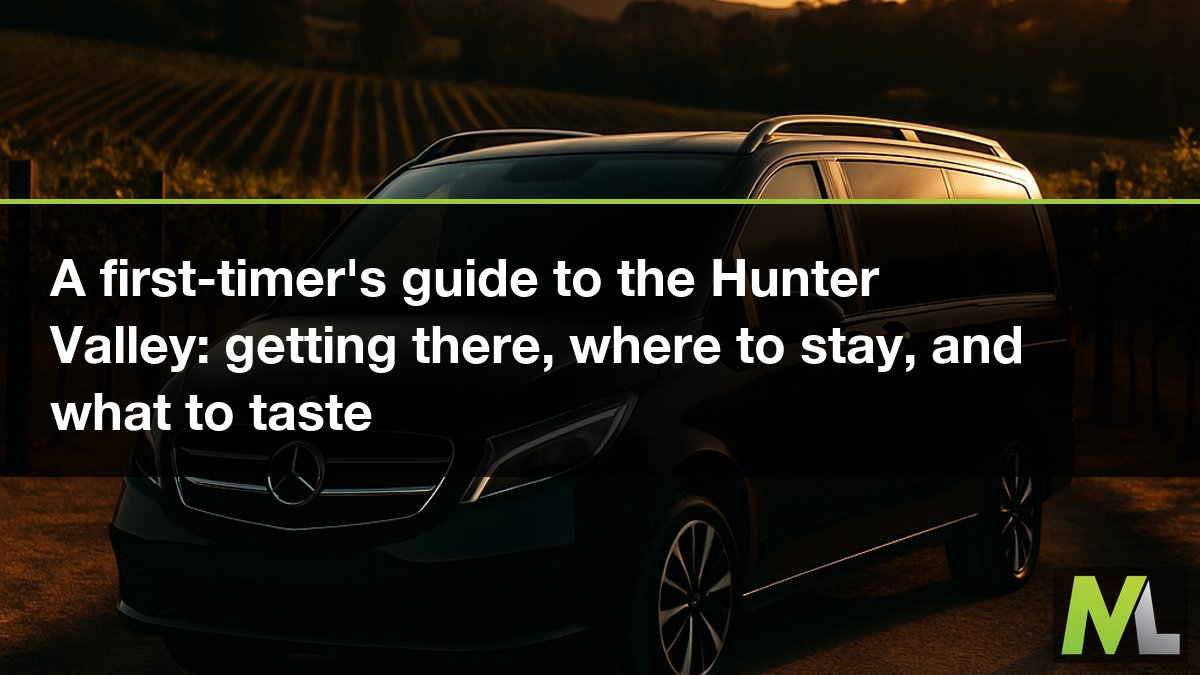
For groups using private chauffeur hire, the driver waits at each venue, so there is no pressure to rush between stops or coordinate pickup times. Sedans seat up to 3 rear-seat passengers, SUVs up to 4, and a Mercedes V-Class fits 6-7 passengers for larger groups splitting costs.
What is the food scene like in the Hunter Valley?
The region’s food offering has expanded well beyond pub meals and cheese platters, though both still exist in quality form. Several cellar doors now operate full restaurants using locally sourced produce (olive oil, handmade cheese, seasonal vegetables). The Pokolbin area has the highest density of dining options, ranging from casual vineyard cafes to multi-course tasting menus. Lovedale and Broke offer quieter dining with fewer options but often a more local feel. Farmers’ markets run on weekends in several locations and stock regional honey, cured meats, artisan bread, and preserves. For a day trip, booking a lunch between morning and afternoon tastings works well. For overnight stays, most accommodation areas have dinner options within a short drive.
Where is the best area to stay in the Hunter Valley?
Accommodation clusters around three main areas, each offering a different experience. Pokolbin places visitors closest to the majority of cellar doors, restaurants, and attractions. Options range from self-contained cottages and guesthouses to resort-style properties with day spas and golf courses. Cessnock, the nearest town, offers more affordable motel and hotel options plus supermarkets, fuel, and services that the vineyard areas lack. For a higher-end stay, several luxury lodge-style properties sit among the vineyards and offer privacy, vineyard views, and on-site dining. Midweek rates across all areas tend to be noticeably lower than weekend rates. Booking accommodation close to planned cellar door visits reduces driving time between tastings and the hotel, especially relevant for those self-driving.
How long is the ideal Hunter Valley trip?
A single full day covers 4-6 cellar doors comfortably, with time for a sit-down lunch. This works well for visitors based in chauffeur services in Sydney who want to experience the region without an overnight stay. The roughly 2-hour drive each way means an early departure and an evening return. Two days allow for a slower pace, with time to explore different sub-regions (Pokolbin on day one, Lovedale or Broke on day two), visit a farmers’ market, and try a restaurant dinner. Three days or more suit visitors who want to combine wine tasting with other activities (hot air ballooning, cooking classes, garden tours) or simply want to relax without a packed schedule. The Hunter Valley is also a common stop for travellers heading further north toward Port Stephens or the mid-north coast.
What is the best time of year to visit?
Autumn (March to May) brings harvest season, mild temperatures, and changing vineyard colours that make it the most popular period. Spring (September to November) is also excellent, with green vines, wildflowers, and comfortable weather for outdoor tastings. Summer can be hot, with temperatures regularly exceeding 30 degrees Celsius in January and February. Winter is the quietest season, with lower accommodation prices and fewer crowds, though some smaller cellar doors may reduce their opening hours. Major events and festivals (wine festivals, music events, food weekends) tend to cluster in autumn and spring, so visitors seeking a quieter trip may prefer to check event calendars before booking.
How does a chauffeur service work for a Hunter Valley day trip?
A private chauffeur collects the group from their Sydney address, drives to the Hunter Valley, and stays with the group for the entire day. The long-distance transfer service from Sydney covers the drive in both directions. On arrival, hourly hire applies with a 2-hour minimum. The chauffeur waits at each winery, restaurant, or other stop, so the group moves on their own schedule. Vehicle options include sedans for couples or small groups, SUVs for up to 4 rear-seat passengers, and the Mercedes V-Class for groups of 6-7. All vehicles include USB charging cables, bottled water, and luggage assistance. Pricing is quoted before travel. The return trip delivers everyone to their door in Sydney, with no need to navigate evening traffic after a day of tasting.
Why choose Marquee Limousines for Hunter Valley transport?
Marquee Limousines operates a company-owned fleet of 16 vehicles in Sydney, providing direct chauffeur service to the Hunter Valley and back. Fixed-price transfers, complimentary wait time, and a driver who stays with the group for the full day make it a practical alternative to self-driving or tour buses. Contact the team to plan a Hunter Valley trip.
Book your transfer with Marquee Limousines by calling 1300 846 008 or request a quote online. For a comparison of when driving makes more sense than flying, see long-distance transfer vs domestic flight.